Commercial and industrial properties often depend on access roads to connect entrances, parking areas, loading zones, and delivery points. These paved routes must support regular vehicle movement while providing safe and convenient access for employees, customers, suppliers, and service vehicles. Houston Asphalt and Concrete helps property owners address paving needs with solutions suited to their site conditions and daily operations. A properly planned access road can improve traffic flow and make a commercial property easier to use.
Access roads experience different demands depending on the type of business. An office property may receive steady passenger vehicle traffic, while a warehouse or distribution facility may have frequent delivery trucks and heavier vehicles. These differences affect pavement requirements, road dimensions, drainage planning, and the preparation needed before installation.
Commercial asphalt access road paving involves more than applying asphalt to a prepared surface. The project should account for existing ground conditions, expected traffic loads, road slopes, and connections to surrounding paved areas. Careful planning helps establish a suitable foundation and creates a finished road that supports the property’s intended use.
Understanding the Purpose of a Commercial Access Road
An access road provides a route for vehicles to enter, move through, and leave a commercial property. It may connect a public road to a parking lot, provide access to a warehouse, or create a dedicated route for deliveries and service vehicles. Its layout should reflect how the property operates throughout the day.
Businesses should consider the types of vehicles that will regularly use the road. Passenger cars, delivery vans, service trucks, and heavy commercial vehicles place different demands on pavement. Turning areas, stopping points, and sections where vehicles frequently change direction may experience additional stress.
Road width and turning space are also important. An access road that is too narrow can make vehicle movement difficult, particularly where larger trucks need to enter or exit. The design should consider available property space while allowing vehicles to move without unnecessary congestion.
A clear layout can also help separate different traffic movements. Where possible, delivery routes, customer access, and employee vehicle movement should be considered during the planning stage. This helps create a more organized property and reduces potential conflicts between vehicles.
Evaluating the Property Before Asphalt Installation
Before construction begins, the existing site should be inspected to identify conditions that may affect the project. Uneven ground, soft soil, standing water, damaged pavement, and changes in elevation can all influence the preparation work required.
For commercial asphalt access road paving, the evaluation should consider the road’s intended traffic, existing surface condition, soil stability, and drainage requirements. These factors help determine whether excavation, grading, base improvements, or removal of old pavement may be necessary.
Property owners should also review how the proposed road will connect with existing entrances, parking areas, sidewalks, and loading zones. Differences in elevation between adjoining surfaces can affect vehicle movement and water drainage. Planning these transitions before construction helps create a more functional finished route.
Working with experienced commercial asphalt paving professionals can help property owners understand the work involved in preparing and installing a suitable pavement surface. The appropriate construction approach depends on the property’s conditions and the type of traffic the access road will carry.
Preparing the Ground and Establishing Proper Grades
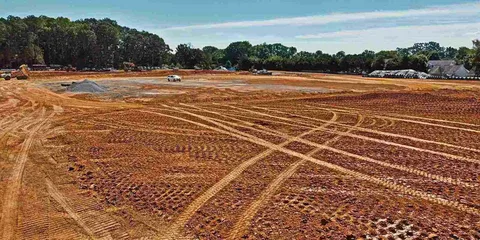
Ground preparation is one of the most important stages of an access road project. The soil beneath the pavement must provide suitable support for the base and asphalt layers. If weak or unsuitable areas are left untreated, the finished road may develop settlement, depressions, or premature surface damage.
Preparation may involve removing unsuitable soil, clearing debris, correcting uneven sections, and establishing the planned road elevations. The amount of excavation depends on the existing ground and the requirements of the project. A consistent foundation helps support the pavement and provides a suitable surface for the next construction stages.
Grading establishes the slopes needed to direct water away from the road surface. Poor drainage can allow water to collect in low areas, affect the pavement structure, and create inconvenience for vehicles. The grading plan should account for surrounding ground levels, nearby buildings, drainage points, and existing paved sections.
The access road should also connect smoothly with adjoining surfaces. Sudden changes in elevation can make vehicle movement uncomfortable and may create areas where water collects. Proper planning helps create practical transitions between the road, entrances, and parking areas.
Building a Strong Base for Commercial Asphalt Paving
The base layer supports the asphalt pavement and helps distribute the weight of vehicles across the prepared ground. Its condition has a direct influence on how the finished road performs under regular traffic.
Depending on the site, base preparation may include placing suitable aggregate material and compacting it to establish a stable foundation. The material and preparation requirements should reflect the expected traffic and ground conditions. Areas used by heavy vehicles may need additional consideration during the planning process.
Asphalt access road installation requires coordination between grading, base preparation, and pavement placement. If the base is uneven or poorly compacted, the asphalt surface may not receive consistent support. This can contribute to settlement, cracking, and other pavement problems.
Property owners should understand what preparation is included in the proposed work. A clear scope should explain whether the existing surface will be removed, whether additional base material is needed, and how the site will be prepared before asphalt placement.
Asphalt Placement and Surface Finishing
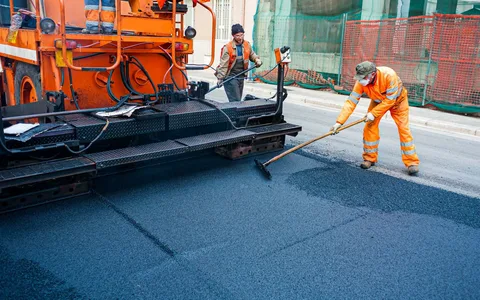
Once the foundation is ready, asphalt can be placed according to the planned road dimensions and project requirements. The material must be distributed evenly to establish the intended pavement thickness and surface profile. Proper placement helps create a consistent driving surface across the access route.
Compaction is another important part of installation. Asphalt must be compacted appropriately to create a dense surface that can support vehicle movement. The construction process should maintain suitable conditions throughout placement and compaction so the finished pavement meets the project’s requirements.
Surface finishing should also account for the road’s intended use. Access routes need practical transitions at entrances, intersections, loading areas, and parking connections. These sections should be planned so vehicles can move between paved areas without unnecessary changes in elevation.
Where the access road connects with other pavement, the adjoining surfaces should be considered during construction. Properly planned connections can help reduce uneven transitions and support a more consistent driving experience.
Commercial Access Road Paving for Spring Businesses
Commercial properties in Spring include offices, retail locations, industrial facilities, and businesses that require dependable vehicle access. Each property has different requirements based on its size, traffic volume, and daily operations.
Some sites need a paved route connecting the main entrance to a parking area, while others require access for delivery trucks and service vehicles. The project should consider vehicle dimensions, turning movements, drainage, and the condition of the existing ground before work begins.
Businesses planning commercial asphalt access road paving in Spring should review the entire route rather than focusing only on the visible pavement surface. The condition of the foundation, road slopes, and connections to surrounding areas can influence the finished result.
Property owners can learn more about asphalt paving services in Spring, TX when reviewing options for commercial pavement projects. A site-specific plan can help address access requirements while considering the property’s existing layout and future needs.
Asphalt Access Roads for Commercial Properties in Tomball, TX
Tomball businesses may need access roads for customer traffic, employee vehicles, deliveries, and regular service operations. The layout and pavement requirements depend on the property’s purpose and the types of vehicles using the site.
Before starting an asphalt project, property owners should consider whether the existing access route has drainage problems, uneven sections, or areas showing signs of pavement deterioration. These conditions may indicate that additional preparation or repairs are needed before a new surface is installed.
For sites with frequent truck movement, turning areas and loading access should receive particular attention. These sections may experience more concentrated traffic than other parts of the road. Reviewing these demands during planning helps determine the appropriate construction approach.
Businesses looking for industrial asphalt paving in Tomball, TX can review local service information through the Tomball, TX service. Considering the property’s traffic patterns and ground conditions can help establish a practical plan for improving commercial access.
Common Problems That Can Affect Commercial Access Roads
Even a properly installed road needs attention over time. Traffic, weather, drainage conditions, and the movement of the underlying ground can affect pavement performance. Recognizing early signs of damage helps property owners determine when an inspection may be needed.
Common access road problems include:
- Cracking: Surface cracks may develop due to pavement aging, movement beneath the surface, or repeated traffic stress.
- Potholes: Water penetration and weakened pavement can contribute to broken areas that affect vehicle movement.
- Surface depressions: Uneven sections may indicate settlement or problems with the underlying support.
- Drainage issues: Standing water can create inconvenience and may contribute to pavement deterioration.
- Edge deterioration: Pavement edges may become damaged where vehicle traffic repeatedly crosses unsupported sections.
The cause of each problem should be evaluated before selecting a repair method. Surface-level damage may require a different solution from problems involving the base or underlying ground. Addressing the actual cause can help prevent repeated repairs in the same location.
Maintaining a Commercial Asphalt Access Road
Regular inspections help property managers monitor pavement condition and identify developing issues. A maintenance schedule should consider the amount of traffic, vehicle types, drainage conditions, and the age of the pavement.
Keeping the road clear of debris can help prevent drainage points from becoming blocked. Property owners should also inspect areas where water collects after rainfall. Persistent pooling may indicate that surface slopes or drainage arrangements need further evaluation.
Cracks and potholes should be assessed when they appear rather than being ignored until the damaged area becomes larger. The appropriate repair depends on the location, size, and cause of the problem. Some issues may be addressed through localized repairs, while more extensive deterioration may require broader pavement work.
Commercial pavement maintenance should also include monitoring road edges, transitions, and areas that receive frequent heavy vehicle traffic. These locations can experience greater stress and may need more frequent attention than sections with lighter use.
Choosing a Contractor for an Asphalt Access Road Project
Selecting a contractor involves reviewing the proposed construction process and the team’s understanding of commercial paving requirements. Property owners should ask how the site will be evaluated, what preparation work is included, and how drainage and road elevations will be addressed.
It is also useful to discuss the expected traffic loads and how they influence the pavement plan. A route used mainly by passenger vehicles may have different requirements from one that regularly carries heavy delivery trucks. The contractor should be able to explain how the property’s intended use affects the proposed work.
Before approving a project, review the work scope, material specifications, preparation requirements, and expected schedule. Businesses should also discuss how construction may affect entrances, deliveries, and daily operations.
Houston Asphalt and Concrete provides paving services for commercial and residential properties. Reviewing the site conditions and the property’s access requirements can help establish a practical approach to asphalt construction and pavement improvements.
Improve Commercial Property Access with Proper Asphalt Paving
A functional access road supports vehicle movement and helps commercial properties operate efficiently. The quality of the finished surface depends on several stages, including site evaluation, grading, base preparation, asphalt placement, and compaction. Each stage should be considered as part of the overall construction plan.
For businesses planning commercial asphalt access road paving in Spring or Tomball, the property’s traffic demands, ground conditions, and drainage requirements should guide the project. A well-prepared approach can help create a dependable route for customers, employees, and commercial vehicles.
Houston Asphalt and Concrete can help property owners review their paving requirements and consider suitable solutions for their sites. Contact the team to discuss your commercial access road project and the work needed to improve your property’s paved access.